|
Home
Breed Lists
New! Kittens New!
Available Retirees
Gallery Of Cats and Kittens
Today's Photos
Today's Cattery
Adding Your Cattery
Corrections/Updates
Renewals
See The Newest Listings
Cattery Banners
The Litter Box From Your Cat's Point Of View
Finding And Buying A Kitten
Tips For Photographing Cats and Kittens
JUST FOR FUN!
Favorite Cats
Favorite Names For Cats
CFA Breed Profiles Slide Show
GCCF
FIFe
TICA
|
Cornish Rex Kittens and Cats
A Cornish Rex is a breed of domestic cat. The Cornish Rex has no hair except for down. Most breeds of cat have three different types of
hair in their coats: the outer fur or "guard hairs", which is about 5 cm long in shorthairs and 10cm+ long in longhairs; a middle layer called
the "awn hair"; and the down hair or undercoat, which is very fine and about 1 cm long. Cornish Rex kitens and cats only have the undercoat.
The curl in Cornish Rex fur is caused by a different mutation and gene than that of the Devon Rex. It originates from Cornwall
in the British Isles. The coat of a Cornish Rex is extremely fine and sometimes curly, the softest of any cat breed. However,
their light coat means that they are best suited for indoor living in warm and dry conditions, they might get hypothermia if they
stay outdoors in the winter. Their body temperature is slightly higher than most cats (102 F), and these cats tend to hang
around light bulbs, the tops of computer monitors, and other warm places including laps and shoulders. Some Cornish Rex kittens and cats also
have a mild cheesy smell peculiar to the breed; this odor comes from scent glands in the paws. Often the breed is referred to as the
Greyhound of the cats, because of the sleek appearance and the galloping run characteristic of the breed. These cats tend to stay
playful and kittenish throughout their long lives. Some Cornish Rex kittens and cats like to play fetch, race other pets, or do acrobatic
jumps. The Cornish Rex is an adventurous cat and is very intelligent. It can readily adapt to new situations and will explore wherever
it can go, jumping into refrigerators, examining washing machines, etc. The Rex is extremely curious, seeks out the company of people and
is friendly towards other companion animals. It is a suitable pet for timid children. Cornish Rex kittens and cats come in a wide variety of
coat colours and patterns, outlined in the standard: solids, including white, black, chocolate, orange and the dilutes blue, lilac and cream;
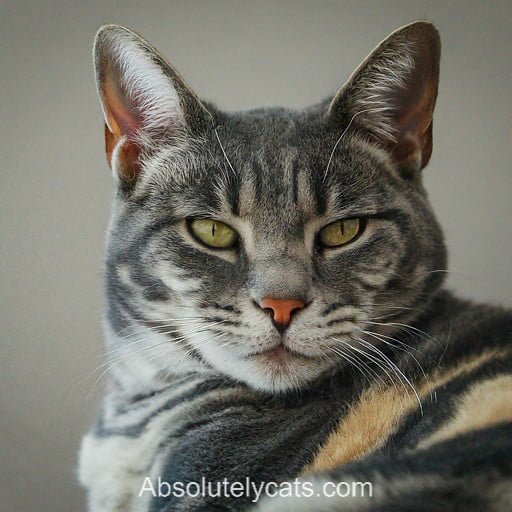
all forms of tabby including classic, mackerel and ticked tabbies, bicolor "tuxedo" coat in many colours, tortoiseshell, "smoke"
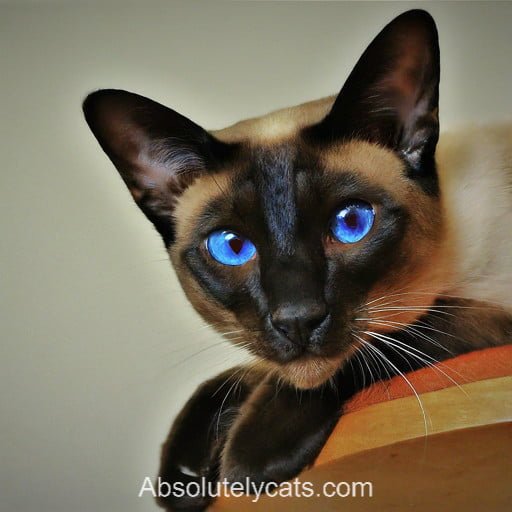
colours and the colour-point pattern standard in the Siamese breed.
Origin
The Cornish Rex is a genetic mutation that originated from a litter of kittens born in the 1950s on a farm in Cornwall, UK hence the first
part of the breed's name. One of the kittens, a cream-colored male named Kallibunker, had an extremely unusual, fine and curly
coat; he was the first Cornish Rex kitten. The owner then backcrossed Kallibunker to his mother to produce 2 other curly-coated kittens.
The male, Poldhu, sired a female called Lamorna Cove who was later brought to America and crossed with a Siamese, giving the breed their
long whippy tails and big ears. The Devon Rex looks similar in appearance to Cornish Rex kittens and cats, but has guard hairs and sheds.
The Devon Rex mutation is different from the Cornish Rex mutation in that the Devon has shortened guard hairs, while the Cornish Rex lacks
guard hairs altogether. Crosses between Devon and Cornish Rexes are not permitted in pedigrees and matings between them will not produce a
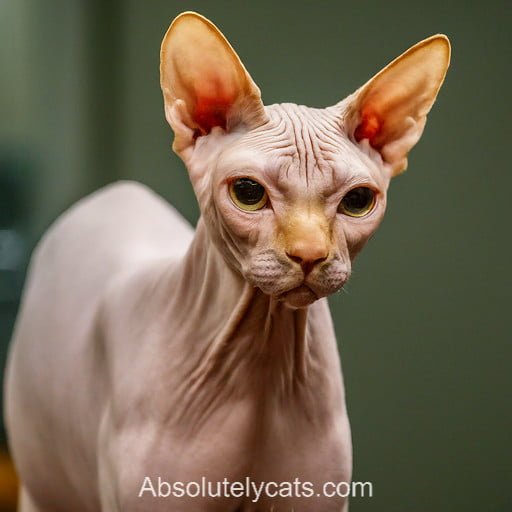
cat with short wavy fur. Another hair-deficient breed is the Sphynx cat, which has no hair but may have a very light coat of fuzz. Using
the word "Rex" to imply curly or otherwise unusual fur originates from an occasion when King Albert I of Belgium (1875-1934) entered some
curly-haired rabbits in a rabbit show. They did not meet the breed standard, but the show's officials did not wish to risk offending the
king by rejecting them. Instead, they accepted them but wrote "Rex" (Latin for "king") beside their names. The rumor that
Cornish Rex kittens and cats do not tolerate certain veterinary anesthetics has not been proven or disproven by studies.
However veterinary medical advice errs on the side of caution, recommending the use of special milder anesthetics for surgery.
Hypoallergenic
Despite some belief to the contrary, the Cornish Rex's short hair does not make it non- or hypo-allergenic. Allergic reactions from cats are not the result
of hair length, the true culprit is a glyco-protein known as Fel d1, produced in the sebaceous glands of the skin, saliva, and urine.
Most people who have cat allergies are reacting to this protein in cat saliva and cat dander: when the cat cleans its fur, the saliva
dries and is transformed into dust which people breathe in. Since Cornish Rex kittens and cats groom as much as or even more than ordinary
cats, Cornish Rex kittens and cats can still produce a reaction in people who are allergic to cats. However, it is widely reported to cause
lesser to little allergic reaction. It is recommended a potential owner visit a cattery to check their own tolerance. Note that,
for more serious allergies, there are several breeds theorized to lack or produce less of the offending protein.
From Wikipedia, the free encyclopedia
http://en.wikipedia.org/wiki/Cornish_Rex
|